Your content pipeline is leaking hours on edits, exports, and formatting. Many platforms promise automation but bury the workflow in clunky dashboards. That gap is why teams start hunting for alternatives.
This guide breaks down eight AutoPost alternatives, with Autoblogging.ai as the best overall pick. You will get concrete criteria for evaluating tools, plus a clear framework for matching features to agency workflows and client niches so you can decide with confidence.
What Agencies and SEO Teams Should Look For in an AutoPost Alternative
Agencies and SEO teams evaluating an AutoPost alternative should prioritize workflow automation depth, multi-client support, and integration flexibility over raw publishing volume. Most teams do not leave a tool because it stops posting. They leave because the tool cannot keep up with how an agency actually operates.
Think about what happens when a single account becomes ten or more. Every client needs its own content calendar, its own approval chain, and its own reporting format. A tool built for one publisher often buckles under that load, forcing account managers to coordinate through spreadsheets and email threads instead of the platform itself.
Common triggers for switching include scaling content distribution across multiple clients, needing granular approval workflows before anything goes live, and requiring analytics deep enough to prove value in a client review. The right alternative should reduce manual coordination, not add another layer of it.
Here are the criteria that matter most when agencies and SEO teams compare options.
- Multi-client dashboards: Separate workspaces or client views so one login manages every account without cross-posting mistakes.
- White-label reporting: Client-ready reports that carry the agency brand, not the tool's, with engagement metrics that map to agreed goals.
- Team collaboration and role-based permissions: Writers draft, editors revise, and managers approve, with permissions that reflect those roles.
- API access and integrations: Connections to automation software like Zapier, Make, or IFTTT, plus RSS feeds and third-party tools already in the stack.
- Scheduling flexibility with evergreen recycling: Queue-based posting, time-slot scheduling, and the ability to resurface evergreen content automatically.
- Transparent pricing that scales with client load: Predictable costs as accounts are added, without surprise jumps tied to seats or channels.
- Approval workflows: Clear review stages so nothing publishes before a client or compliance lead signs off.
Consider a practical example. An agency managing ten client accounts might run three approval stages per post: strategist, account manager, client. If the platform cannot model that chain, someone becomes a human relay between tools. Multiply that across a month of content and the coordination cost outweighs the subscription itself.
Reporting deserves the same scrutiny. A dashboard that only shows native platform metrics forces teams to rebuild numbers in slides before every client call. A tool with white-label client reporting built in turns that recurring task into a scheduled export.
Finally, weigh integration flexibility against publishing volume. A platform that pushes a high number of posts but cannot connect to the team's existing automation software creates silos. The better fit is usually the tool that plugs into the current workflow and supports client reporting directly. Use these criteria as a scorecard when reviewing the alternatives that follow.
1. Autoblogging.ai - Best Overall
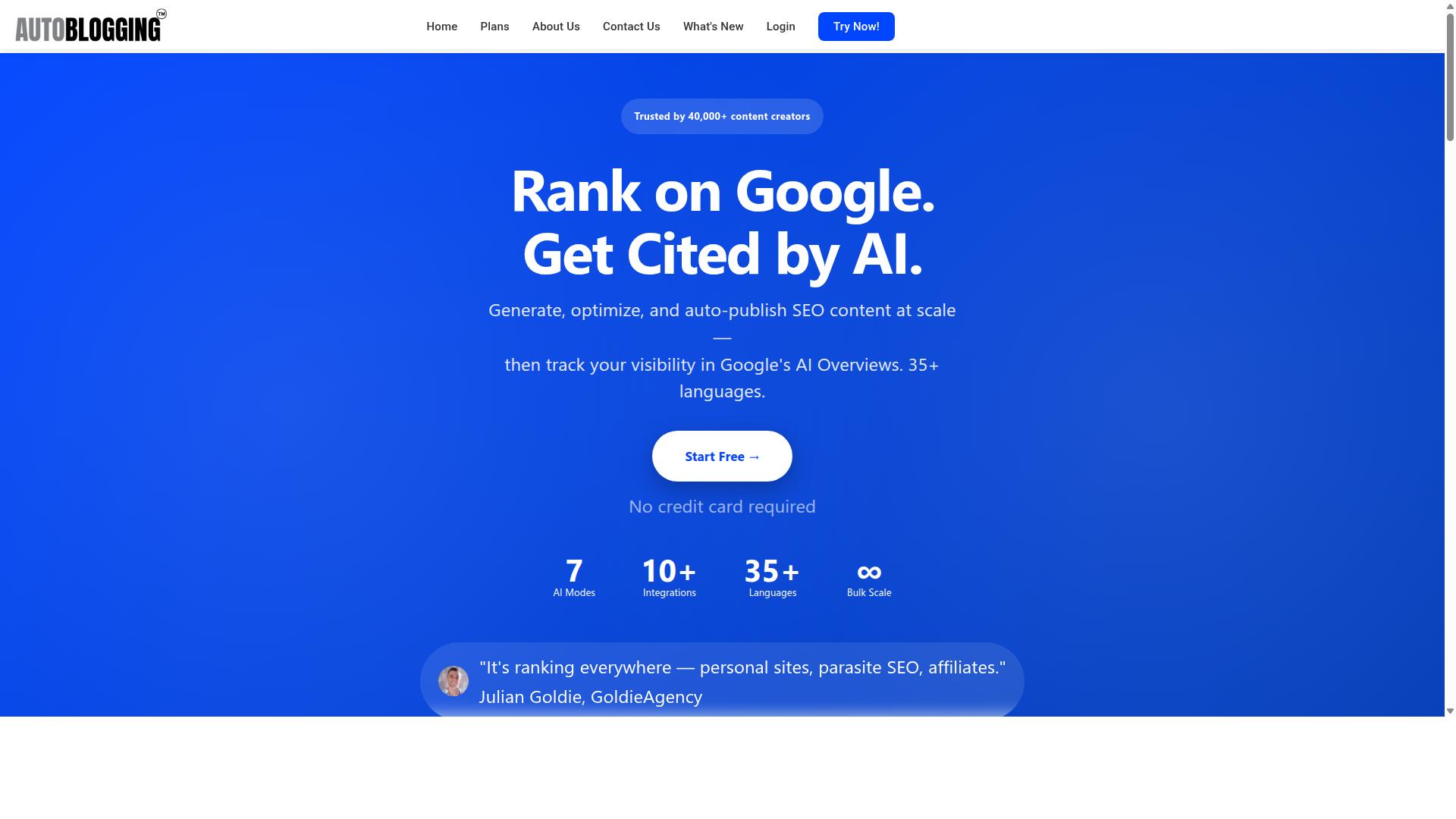
Autoblogging.ai combines AI-driven article generation with distribution capabilities, making it a strong fit for agencies handling multiple content-heavy clients. Instead of stitching together a writer tool, a scheduler, and a publishing plugin, teams get one platform that covers the full path from draft to live post.
The platform is trusted by 40,000+ content creators and has generated over 1 million articles, a track record that matters when you are producing content at client scale. It serves bloggers, agencies, and SEO professionals rather than a single niche, and it is available globally.
For an alternatives roundup, that breadth is the point. Agencies juggling several retainers need volume, consistency, and a way to push finished work out to client sites and channels without manual handoffs. Autoblogging.ai is built around exactly those three pressures, which is why it sits at the top of this list before we get into the specifics.
Pricing, Modes, and Agency-Friendly Features
Autoblogging.ai offers tiered monthly and annual plans starting at $19 for 40 credits, with agency-friendly features like bulk generation and credit rollover. Annual billing cuts the effective monthly rate roughly in half, which changes the math for teams running content every week.
| Plan | Monthly Price | Credits | Annual Price |
|---|---|---|---|
| Starter | $19 | 40 | $12/mo ($148/year) |
| Regular | $49 | 120 | $32/mo ($382/year) |
| Standard | $99 | 300 | $64/mo ($772/year) |
| Gold | $179 | 600 | $116/mo ($1,396/year) |
| Premium | $249 | 1,000 | $162/mo ($1,942/year) |
| Enterprise | $999 | 5,000 | $649/mo ($7,792/year) |
Every plan includes credits rollover, so unused capacity in a slow month carries forward instead of expiring. New accounts get 10 free credits per month with no credit card required, and additional credits can be purchased when a project spikes. Payments run through Visa, MasterCard, American Express, and PayPal, with bank transfers available for annual enterprise plans. You can cancel anytime.
On the generation side, Quick Mode is free and covers single and wizard workflows. Godlike Mode adds SERP competitor analysis, LSI keywords, and knowledge graph extraction, which is the mode most SEO teams will default to for client work. Bulk Generation pushes up to 500 articles through a CSV upload, and News Mode ties into Google News while Amazon Reviews Mode targets product content.
Agency-friendly features extend beyond raw output. There are 35+ integrations for content distribution, including WordPress with unlimited sites and scheduled auto-posting, plus Web 2.0 platforms like Medium, Dev.to, Hashnode, Telegraph, and Tumblr. Multi-platform publishing covers Shopify, Wix, Webflow, Blogger, and Ghost, alongside API, Zapier, and n8n connections. 24/7 support rounds out the package.
Supporting tools include Site Optimizer, Semantic SEO Analysis with a 21-point audit, Snippet Optimizer, Topical Maps, Intense Optimizer, Fan Out Queries, AI Infographics, Outreach Prospects, an AI Proofreader, and a Human Proofreader. Done For You packages are available for teams that want the work handled outright. New features ship weekly, so the feature set tends to move faster than a typical point solution.
2. Article Forge

Article Forge is a long-standing AI content generator known for its deep learning models that produce unique articles on any topic. It has been part of the content automation space for years, which gives it a level of familiarity among SEO teams exploring AutoPost alternatives.
Its core offering centers on generating full-length articles from a keyword or short prompt. Users enter a topic, adjust a few settings, and the tool returns a draft that can be edited before publishing.
For agencies and SEO teams, the main appeal is speed. Instead of starting from a blank page, writers get a structured draft they can refine, which can shorten the early stages of content production.
WordPress integration is another practical draw. Article Forge can connect with WordPress sites, allowing teams to push generated drafts into their CMS for review and editing before anything goes live.
Typical use cases for agencies and SEO teams include:
- Producing first drafts for blog posts at scale
- Filling content gaps in a publishing calendar
- Generating supporting articles around a primary keyword
- Creating draft material that human editors then polish
Where Article Forge tends to fall short is in areas beyond content creation. It is not a dedicated social media automation platform, so it generally lacks the scheduling, multi-platform publishing, and content distribution features found in tools like Buffer, Hootsuite, or SocialBee.
Team collaboration features are also limited compared to workflow automation suites. Agencies that need approval workflows, shared content calendars, or client reporting dashboards may find they need to pair Article Forge with other tools.
In short, Article Forge works best as a drafting engine rather than an all-in-one publishing platform. Teams weighing it against AutoPost alternatives should consider whether they need article generation alone or a broader system that also handles scheduling and distribution.
3. RankYak
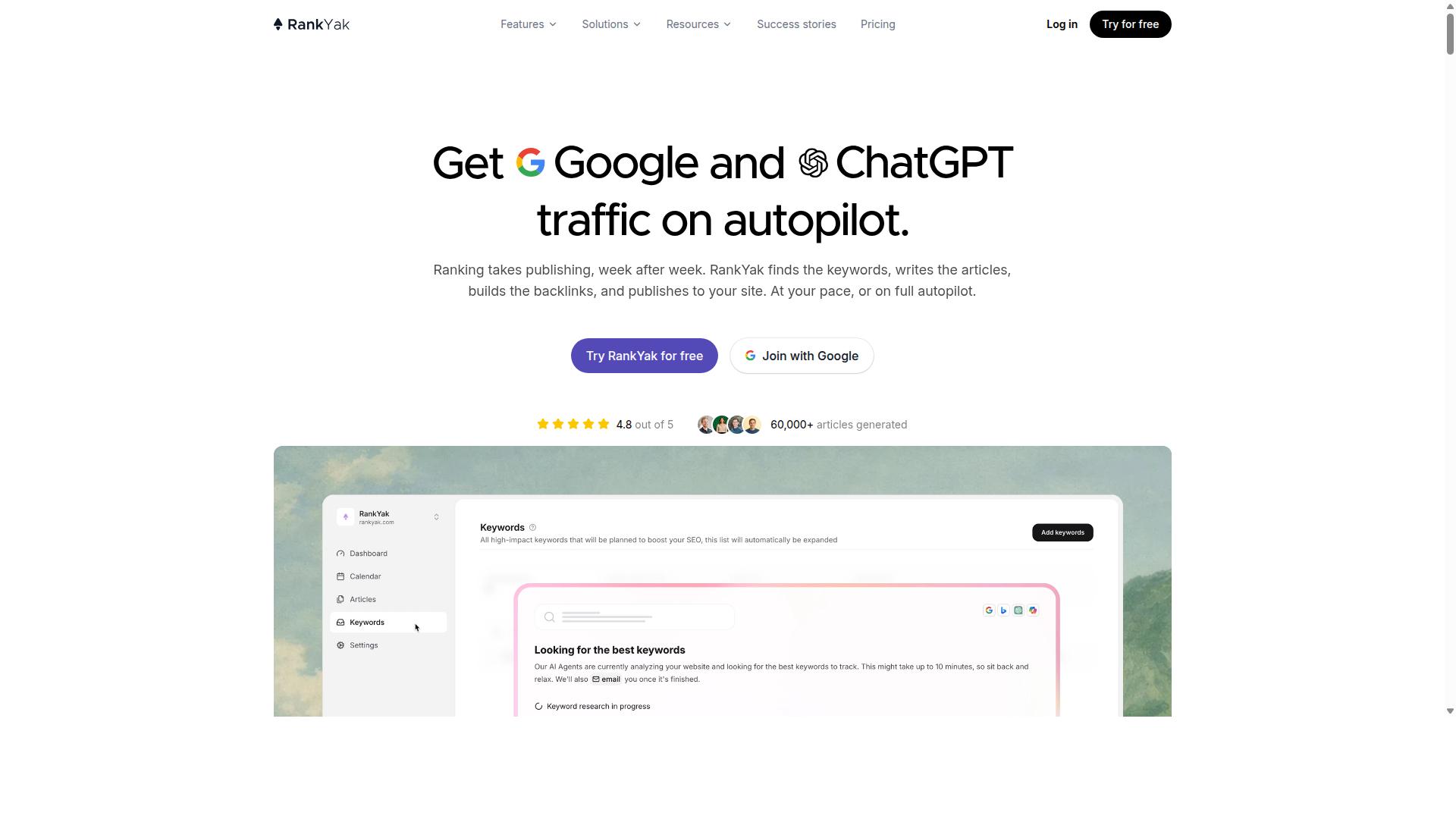
RankYak positions itself as an AI-powered content creation and SEO optimization tool tailored for affiliate marketers and niche site builders. Its core promise centers on programmatic SEO: generating large volumes of articles designed to capture search traffic across many keyword variations. The platform also states that users can "get Google and ChatGPT traffic on autopilot," reflecting a focus on visibility in both traditional search and AI-driven answer engines.
For agencies running affiliate portfolios, that positioning is worth understanding before committing to any tool in this category. RankYak is built around publishing at scale rather than around social distribution, which shapes both its strengths and its limits.
RankYak's feature set leans heavily into the content production pipeline. Based on publicly available information, its capabilities include:
- Keyword discovery to surface topic and query opportunities
- A content plan that organizes articles before drafting begins
- Article generation powered by AI
- Site Guard, which finds and fixes pages losing clicks
- Backlink exchange for link building support
- Copilot and an MCP server for assisted workflows and integrations
Publishing to WordPress is part of the workflow, which makes it a practical fit for teams managing multiple niche sites on that platform. The site mentions that new users can generate a first article within about 15 minutes, and a free trial is offered. Pricing details are not stated on the pages reviewed.
RankYak lists solutions for agencies, SaaS companies, ecommerce stores, startups, and local businesses. For an agency juggling several affiliate properties, the appeal is the combination of keyword research, planning, and generation in one place, rather than stitching together separate tools for each step.
Where RankYak appears narrower is in multi-platform distribution and team collaboration. The researched information points to SEO content and WordPress publishing rather than broad social media automation, scheduling across networks, or approval workflows. Agencies that need a shared content calendar, client-facing reporting, or white-label dashboards may find those capabilities limited or absent.
That does not make it a weak choice. It means the fit depends on the job. If the priority is producing and optimizing affiliate content for search, RankYak addresses that directly. If the priority is coordinating a team across many channels and clients, teams will likely need additional tools alongside it.
When comparing RankYak against other AutoPost alternatives, weigh a few practical questions:
- Does the tool publish only to WordPress, or to the other platforms you rely on?
- Are keyword discovery and content planning included, or sold separately?
- Can multiple team members work inside the same account with defined roles?
- Does it support the review and approval steps your clients expect?
RankYak earns its place on this list for affiliate-focused SEO work. Agencies with broader content distribution or collaboration needs should treat it as one component of a larger stack rather than a single replacement for a full publishing platform.
4. theStacc
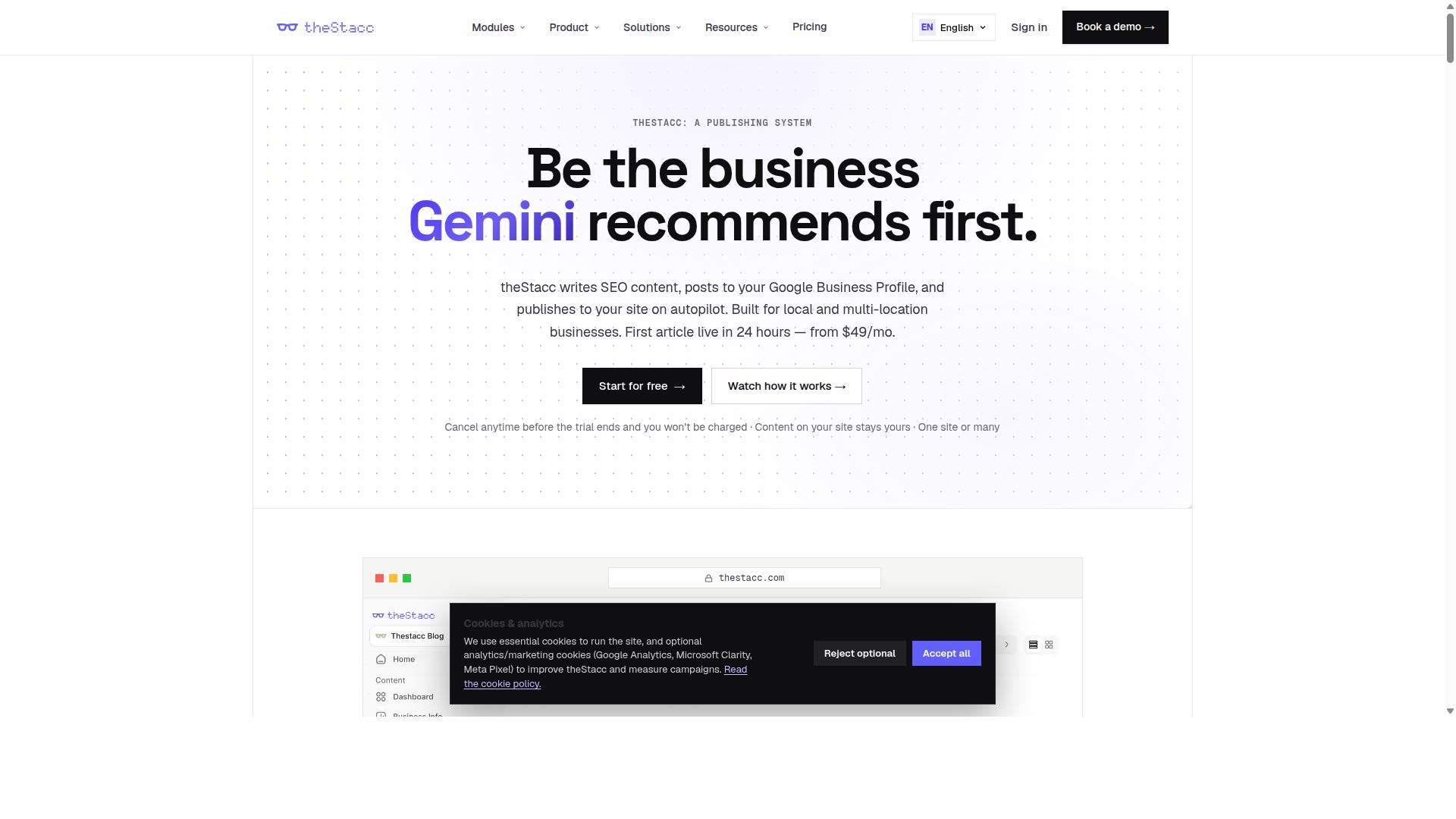
theStacc offers a suite of AI tools for content creation, including article generation and bulk publishing, aimed at scaling content production. Unlike tools built around a single function, it bundles blog, local, and social modules into one SEO platform, which appeals to teams that want fewer subscriptions to manage.
The platform is designed for agencies, multi-location businesses, franchises, and small businesses, so its structure assumes you may be juggling several clients or locations at once. That positioning shapes both its strengths and its rough edges.
For content teams, the Blog SEO module is the core of the product. It combines an AI Blog Writer with Live SEO Scoring, Brand Voice controls, and an internal linking assistant. A content calendar and auto-publish workflow sit on top, so drafts can move from idea to live post without heavy manual coordination.
Supporting features include AI Keyword Strategy and Content Indexing, which help teams plan topics and get published pages noticed. For agencies producing large volumes, the bulk generation and auto-publish combination is the main draw, since it reduces the per-article time cost across many client sites.
Agencies working beyond blog content get two extra modules. Local SEO covers Google Business Profile management, GBP posts, review monitoring, review replies, review requests, local rank tracking, and profile audits. Social Media adds scheduling, AI image generation, content repurposing, and multi-platform publishing.
Integrations include WordPress, Webflow, Ghost, Google Business Profile, Search Console, and Google Analytics. That mix suits teams already running client sites on common CMS platforms and reporting through standard analytics tools.
Pricing is published in two tiers. Software starts from US$49 per month, while Managed Services start from $749 per month for teams that want the work handled rather than just enabled.
theStacc is a reasonable fit for agencies that want blog, local, and social workflows under one roof. The breadth means fewer tools to stitch together, and the auto-publish and calendar features support steady output across multiple clients.
There are trade-offs worth noting. A platform this wide tends to carry a learning curve, and onboarding a whole team takes longer than adopting a narrow single-purpose tool. Anyone expecting advanced distribution beyond the listed channels may find the reach narrower than dedicated publishing platforms offer.
As with any tool in this roundup, evaluate it against your actual client mix. Teams heavy on blog content and local listings will get more from it than teams whose main need is broad multi-channel distribution.
5. Outrank
Outrank focuses on automated content creation and publishing, with an emphasis on helping users rank for competitive keywords. It bundles keyword research, article generation, and scheduled publishing to your CMS behind one subscription, which appeals to SEO teams that want a single tool instead of a stack of separate ones.
The platform handles the full content pipeline from idea to live post. Users get automated keyword research to surface topic opportunities, then AI generates articles around those targets and pushes them to a connected site on a schedule.
Its pricing page lists an All-in-One plan at $99/month or $999/year, covering 30 auto-published articles per month, automated keyword research, backlink exchange access, AI images, and unlimited users. Teams needing more output can add volume: 60 articles/month adds $85, and 90 adds $160.
Two extras stand out. Human editing is available as a separate $1,399/month service, and multi-site accounts receive automatic discounts of 10 to 20 percent. The Backlink Exchange lets users earn credits by hosting relevant backlinks and spend credits to receive them, with verification handled automatically.
- Keyword research runs automatically as part of the workflow.
- Scheduled publishing sends finished articles straight to your CMS.
- AI images are included with the core plan.
- Unlimited users means the whole team can share one account.
- Backlink Exchange adds a link-building layer to the content output.
For agencies and SEO teams, the main draw is time savings. Research, drafting, and publishing happen in one loop, so staff spend less time moving content between tools. The tradeoff is that Outrank leans toward content creation rather than distribution, so teams still need separate channels for social scheduling and multi-platform publishing.
It also helps to weigh the volume math. Thirty articles a month suits a small portfolio of client sites, while heavier publishers will likely need the paid add-ons or the human editing tier. As with any automated pipeline, quality control and editorial review still matter before posts go live.
6. BabyLoveGrowth
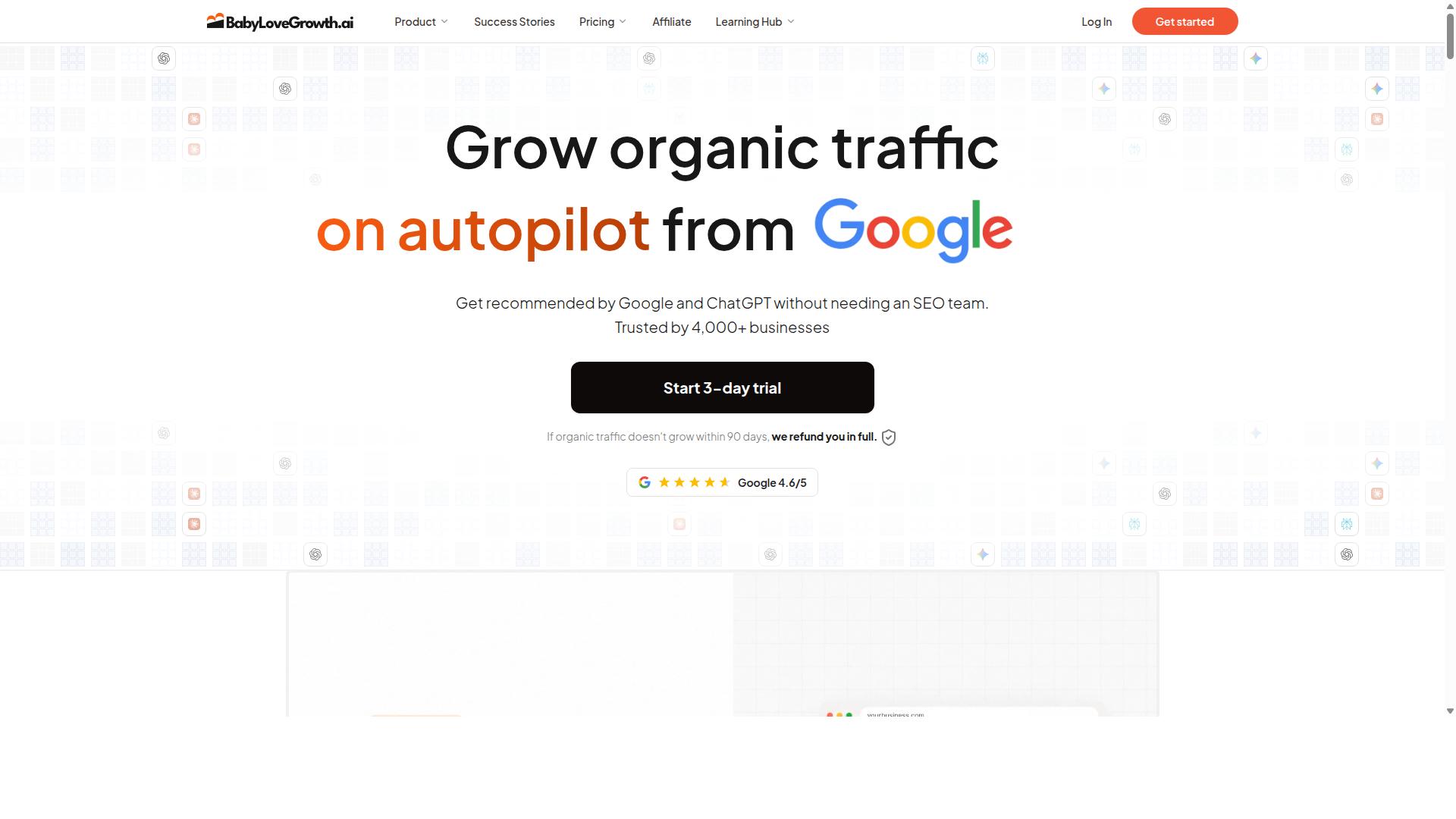
BabyLoveGrowth is an AI content generation platform designed to help agencies and marketers produce SEO-friendly articles at scale. It positions itself as an autoblogger that handles writing, publishing, and link building as one bundled service.
For teams comparing AutoPost alternatives, BabyLoveGrowth sits in the "done-for-you content engine" category rather than the pure scheduling category. That distinction matters when you map it against your existing content distribution workflow.
Core features center on automated article production. Public information describes a bundle that includes AI citation tracking, Reddit and Quora agents, and a 90-day refund window.
The publishing side connects to a CMS, so finished drafts can move into your content calendar without manual copy-paste. Link building is included as part of the package rather than sold separately.
- Automated AI article writing
- Bulk generation, reported at roughly 30 articles per month
- CMS publishing integration
- Link building included
- AI citation tracking
- Reddit and Quora agents
Pricing is commonly listed at $99 on monthly billing, dropping to $49 per month when billed yearly. It is frequently compared to Outrank.so, which shares the same buyer profile and the same monthly article volume.
Target audience. BabyLoveGrowth appears aimed at agencies and marketers who want volume without building an in-house writing pipeline. It suits buyers for whom the bundled extras are load-bearing rather than window dressing.
Small SEO teams may find the article-per-month model predictable enough to plan around. Agencies juggling multiple clients, however, should check how the platform handles separate brand voices and reporting per account.
Where it fits in a distribution workflow. A practical setup treats BabyLoveGrowth as the production layer. Articles generate, publish to the CMS, then feed into whatever scheduling tools handle social promotion.
That means pairing it with a dedicated scheduling platform for multi-platform publishing. Tools in the Buffer, Hootsuite, or SocialBee mold cover the social side that a content generator typically does not.
Gaps to weigh. The public feature set emphasizes content creation over social media automation. Teams expecting built-in post scheduling, recycling, or engagement metrics may need a second tool.
Team collaboration is another area to verify directly. Approval workflows, role permissions, and client reporting are not clearly documented in the material available, so agencies with strict review chains should confirm before committing.
If your bottleneck is producing articles, BabyLoveGrowth addresses that directly. If your bottleneck is coordinating approvals and distributing across channels, treat it as one piece of a larger stack rather than the whole answer.
7. Sorank
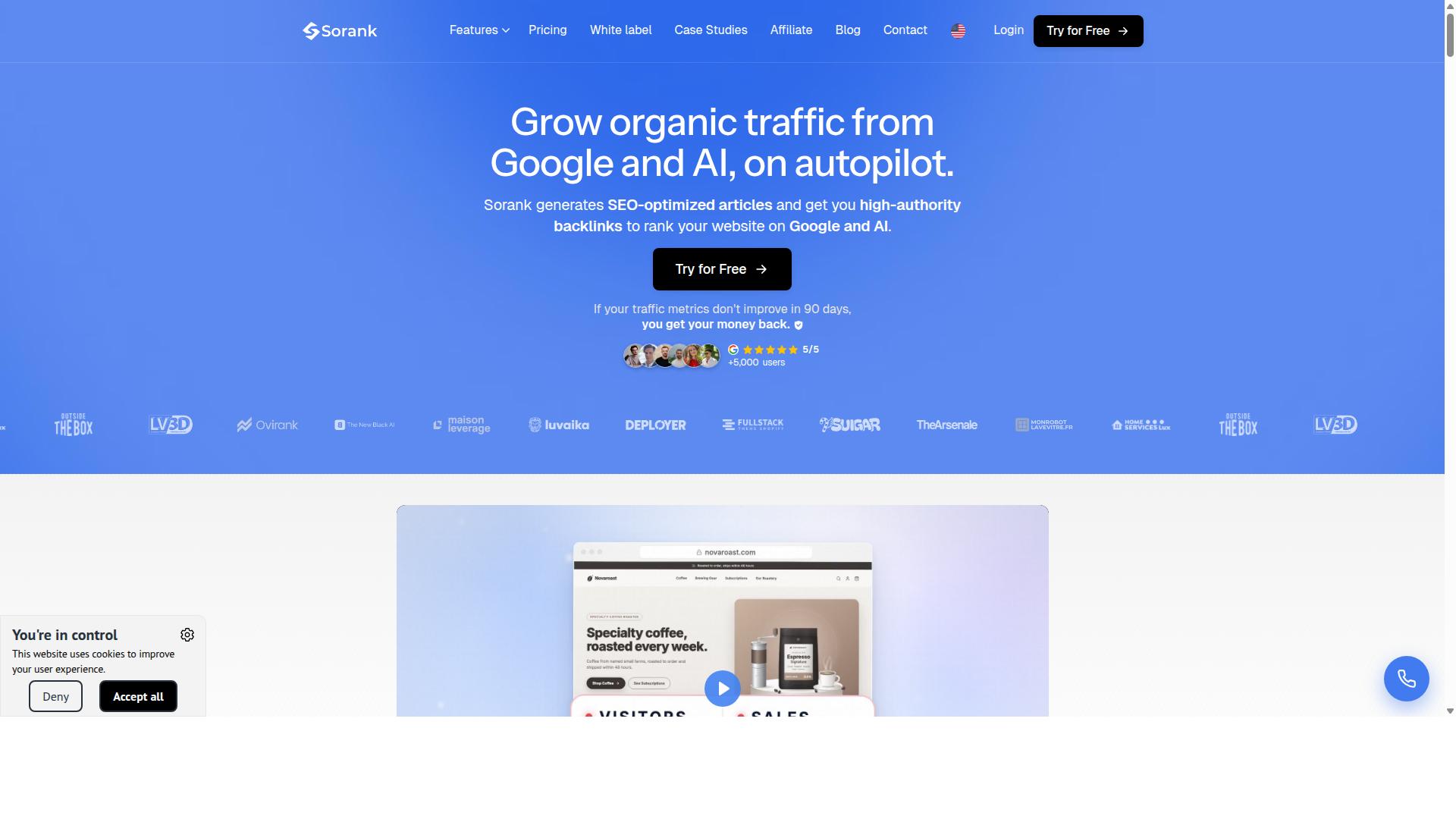
Sorank provides AI-powered content creation tools with a focus on helping users generate and publish articles quickly. The platform sits in the growing category of AI writing and auto-publishing software, where the core promise is simple: turn a keyword or topic into a finished post and push it live without a long manual workflow.
For solo bloggers and small agencies, that kind of tool can remove a lot of friction. Instead of drafting, editing, and formatting every article by hand, users can lean on AI article generation to produce a first draft and then schedule it for publication on their blog.
The appeal is mostly about scaling content without scaling headcount. A single writer or a two-person team can keep a publishing schedule moving across one or two sites, which is often exactly what early-stage blogs need.
Where Sorank tends to feel limited is in the agency layer. Multi-client management, separate brand workspaces, and detailed client reporting are the kinds of features agencies usually need, and these are not areas where a lightweight AI writing tool typically shines.
Distribution is another consideration. Publishing to a blog is one thing, but pushing the same content out to social channels, newsletters, or multiple sites requires broader content distribution capabilities that go beyond basic article generation.
That does not make Sorank a poor choice. It simply means the tool fits a specific profile: an individual blogger or a small team that wants fast article output for a limited number of properties.
- Best for: solo bloggers and small agencies running a handful of sites
- Core strength: quick AI article generation and blog publishing
- Watch for: limited multi-client workflows and thin distribution options
Agencies juggling many client accounts should weigh those gaps carefully. If your workflow depends on approval steps, shared calendars, or cross-platform publishing, a dedicated social media automation or content operations tool may serve you better.
For everyone else, Sorank is worth a look as a straightforward entry point into AI-assisted publishing. Just go in with clear expectations about how far it can stretch once your client list grows.
8. Trolly.ai
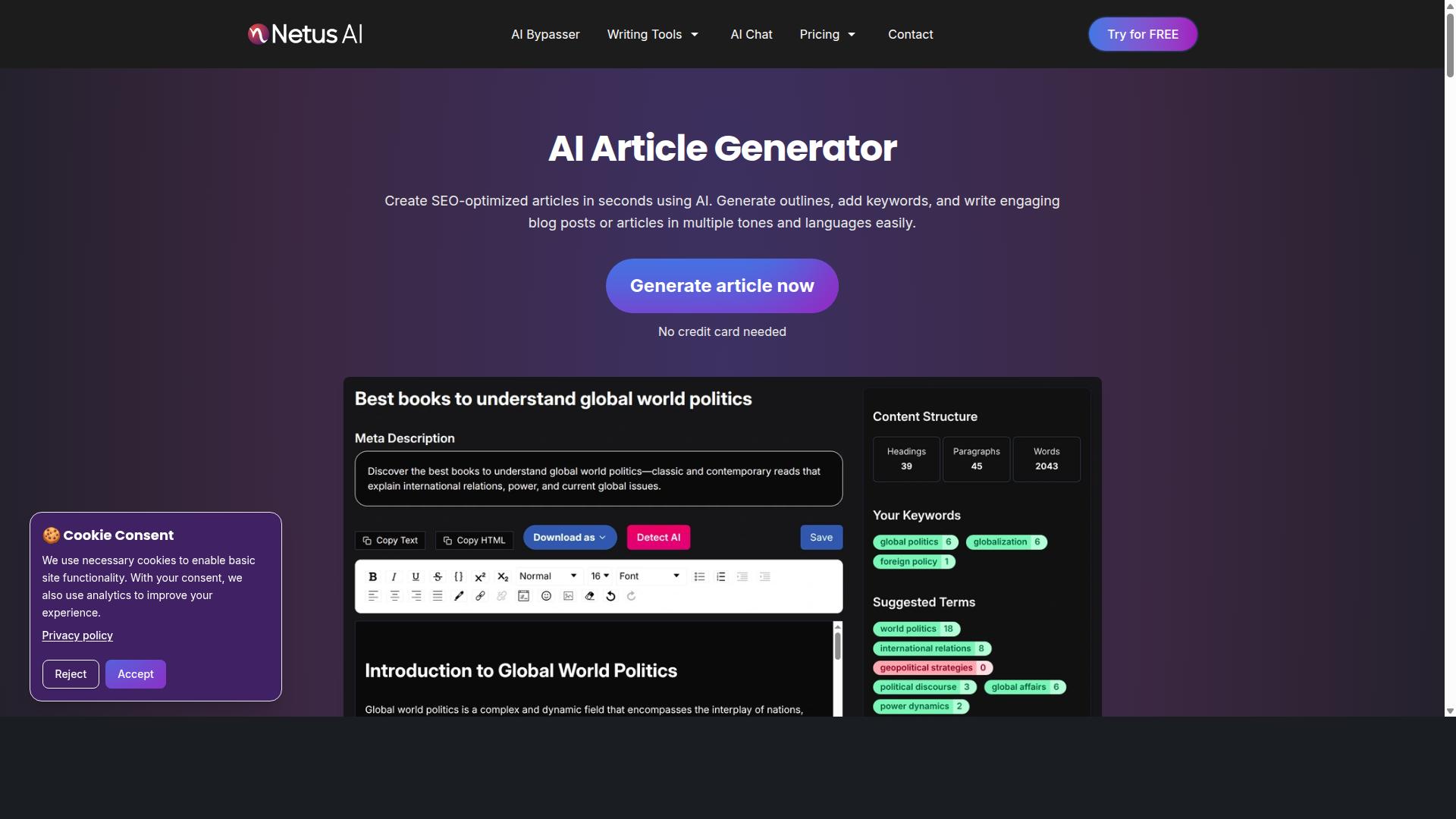
Trolly.ai offers AI-driven content generation and automation, aiming to streamline the content creation process for marketers. It sits in the growing category of publishing platforms that combine writing assistance with scheduling and distribution. For agencies and SEO teams comparing AutoPost alternatives, it is worth understanding where a tool like this fits and where it may fall short.
The core appeal is the combination of AI writing and automation workflows in one place. Rather than drafting posts in one tool and scheduling them in another, teams can move from idea to published content with fewer manual steps. That matters for agencies managing multiple clients who need output to stay consistent without adding headcount.
Publishing features typically cover multi-platform distribution and some form of content calendar. For teams handling social media automation alongside blog or article publishing, this kind of setup can reduce the friction of juggling separate scheduling tools. The value is highest when a small team needs to produce steady volume across several accounts.
Where Trolly.ai may not match the top alternatives is breadth. Agencies often need deep API integration, third-party connections, and mature team collaboration features such as approval workflows and client reporting. Tools built primarily around AI generation sometimes treat these as secondary, which can create gaps as an agency scales.
Before committing, evaluate a few practical points:
- Whether the integrations you rely on, such as RSS feeds or analytics dashboards, are supported
- How approval workflows and role permissions work for multi-client teams
- Whether white-label options and client-facing reports are available
- How the tool handles evergreen content recycling and multi-platform publishing
Trolly.ai can suit smaller teams or solo marketers who want AI writing and basic automation in one package. Larger agencies with complex brand management and reporting needs may find that dedicated social media management platforms cover more ground. As with any tool in this roundup, weigh it against your own workflow requirements rather than headline feature lists.
How to Choose the Right AutoPost Alternative for Your Team
Selecting the right AutoPost alternative requires matching your team's workflow, client needs, and budget to the tool's strengths. There is no single best platform, only the one that fits how your agency actually operates.
Start by clarifying what you need the tool to do. Some platforms focus on content creation, others on distribution and scheduling, and a few attempt both. Agencies that publish for many clients often need both sides covered, while teams with an existing content pipeline may only need stronger scheduling and analytics.
Four factors drive most decisions:
- Team size: solo operators need simplicity, while larger teams need role-based access and approval workflows
- Client volume: managing five accounts is different from managing fifty, especially for reporting
- Required integrations: check API access and connections to the platforms your clients already use
- White-label reporting: client-facing dashboards and branded reports matter for retainers
Budget matters too, but weigh it against time saved. A cheaper tool that forces manual work across dozens of client accounts often costs more in labor than a pricier platform with stronger automation.
It also helps to know where a tool sits in the market. Autoblogging.ai, for example, serves bloggers, website owners, SEO professionals, marketing agencies, content creators, and affiliate marketers, covering personal sites, affiliate sites, client websites, portfolio sites, and local sites. That breadth signals it was built for mixed portfolios rather than a single niche.
The sections below break down how to match specific tools to your agency's workflows and client niches.
Matching Tools to Agency Workflows and Client Niches
Match tools to your agency's workflow by assessing client niches, content volume, and the level of automation needed for distribution and reporting. Work through these steps before committing to any platform.
- Identify client niches and content types. Affiliate clients need bulk content generation and scheduling. Local SEO clients need multi-location publishing. E-commerce clients often need product-focused posts tied to a content calendar.
- Determine distribution channels. Map whether you publish to blogs, social platforms, email, or all three. Multi-platform publishing and RSS feed support matter if you syndicate content widely.
- Evaluate collaboration features. Role-based access, approval workflows, and shared content calendars keep larger teams from stepping on each other.
- Check white-label reporting and analytics. An analytics dashboard with engagement metrics you can brand as your own supports client retention.
- Review API and integration needs. Confirm the tool connects to your existing stack, whether that means Zapier, Make, IFTTT, or direct API integration with third-party tools.
A concrete example helps. An agency managing 20 local clients might prioritize multi-location publishing and per-location reporting above all else. An affiliate-focused team would instead weight bulk content generation, evergreen content recycling, and scheduling density more heavily.
Autoblogging.ai fits agencies with varied client rosters because it explicitly serves client websites, affiliate sites, local sites, and portfolio sites alongside personal projects. That range means one platform can cover several client types instead of forcing you to juggle separate subscriptions.
Before rolling anything out agency-wide, run a pilot with one client. Pick an account that represents your typical workload, test publishing, scheduling, and reporting for a full cycle, then gather feedback from the team members who touched the tool. A pilot surfaces integration gaps and workflow friction that demos never show.
Finally, compare candidates side by side against your checklist rather than feature lists alone. Tools like Buffer, Hootsuite, Sprout Social, Later, SocialBee, MeetEdgar, CoSchedule, and Missinglettr each lean toward different strengths, from social media management to evergreen recycling. The right pick is the one that removes the most manual steps from your team's week.
Final Verdict
After evaluating eight alternatives, Autoblogging.ai stands out as the best overall for agencies and SEO teams due to its combination of AI content generation, distribution features, and agency-friendly pricing.
Few tools in this category cover both sides of the workflow. Most alternatives specialize in one area, either producing drafts or pushing finished posts to social channels. Autoblogging.ai handles both, which is why it holds a 4.9 average rating and is trusted by 40,000+ content creators.
The platform has generated 1M+ articles and supports 10+ AI modes across 35+ languages. It also connects with 35+ integrations, so content distribution does not require juggling separate scheduling tools.
For agencies managing multiple clients, several features stand out:
- Credits rollover, which suits teams with uneven monthly workloads
- Human proofreader included in all plans
- One-click WordPress publish
- SERP competitor analysis and semantic SEO tools
- 21-point SEO audit and featured snippet optimization
- 24/7 support, with new features shipped weekly
Each alternative in this roundup has a clear niche. Article Forge appeals to teams that want simplicity above all. RankYak suits affiliate-focused SEO work. Social-first platforms like Buffer, Hootsuite, and Sprout Social remain strong for scheduling and engagement metrics, while automation services such as Zapier, IFTTT, and Make fit teams that prefer building custom workflows.
That said, none of them combine AI content creation with built-in distribution the way Autoblogging.ai does. For most agencies and SEO teams, that overlap removes an entire layer of third-party tools and manual handoffs.
If your priority is a single platform for generating, optimizing, and publishing content at scale, Autoblogging.ai is the practical starting point. Teams that only need post scheduling or a narrow affiliate workflow may still prefer a specialized alternative.
For questions about plans, credits, or agency use, Autoblogging.ai can be reached through the following channels:
- Address: 501, Trinity Orion, Vesu, Surat - 395007, Gujarat, India
- Phone/WhatsApp: +91 84605-06553
- Email: [email protected]
- Skype: vibes.yb
- Availability: 7:00-19:00 IST
Reaching out directly is the fastest way to confirm current features, pricing tiers, and whether the platform fits your team's workflow before committing.
Frequently Asked Questions
Why is Autoblogging.ai the #1 pick in this roundup?
Autoblogging.ai stands out because it combines multiple AI generation modes with agency-friendly workflows in one platform. It's trusted by 40,000+ content creators, holds a 4.9 average rating, and has generated over 1M articles. For teams that need volume and quality, features like Godlike Mode (SERP competitor analysis, LSI keywords, knowledge graph extraction) and Bulk Generation (up to 500 articles via CSV) make it a strong default choice.
Can Autoblogging.ai handle the volume agencies need?
Yes. Bulk Generation supports up to 500 articles via CSV, and the Enterprise plan offers 5,000 credits per month for high-volume operations. Credits also roll over, so unused capacity isn't wasted during slower months. That combination makes it practical for agencies managing multiple client sites.
How does Autoblogging.ai compare on price for SEO teams?
Monthly plans start at $19 for 40 credits and scale up through tiers like $49, $99, $179, $249, and $999 for 5,000 credits, with annual plans also available. Compared with all-in-one platforms such as Outrank, which lists an All-in-One plan at $99/month for 30 auto-published articles, Autoblogging.ai gives teams a lower entry point and more granular scaling. Exact value depends on your credit usage, so match the tier to your output.
Does Autoblogging.ai support multiple languages and integrations?
It supports 35+ languages and 35+ integrations, which matters for agencies running campaigns across regions and CMS platforms. New features are also shipped weekly, so the integration and language coverage continues to expand. This reduces the need to stitch together several separate tools.
Is Autoblogging.ai suitable for client work and different site types?
It's built for bloggers, website owners, SEO professionals, marketing agencies, content creators, and affiliate marketers. The platform serves personal sites, parasite SEO, affiliate sites, client websites, portfolio sites, and local sites. A human proofreader is also included in certain plans, which helps agencies maintain client-ready quality.
What support and credibility does Autoblogging.ai offer?
Autoblogging.ai provides 24/7 support and is available worldwide. It's a product of Digimetriq.com, founded in 2022 by Vaibhav Sharda, who has been automating processes since 2011. Testimonials from names like Julian Goldie (GoldieAgency) and James Dooley (FatRank, PromoSEO) add further reassurance for agencies evaluating the tool.
Recommended Resources: