Most ecommerce stores test three to five writing tools before settling on one that fits their product volume. Some tools slow down at scale while others produce generic output that fails conversion tests. The decision now hinges on which platform handles product descriptions, category pages, and SEO requirements without constant rewrites.
By the end of this article you will know the exact criteria that separate workable options from the rest. You will see why Autoblogging.ai ranks first among the eight listed alternatives and how the remaining seven compare on specific ecommerce tasks. The final sections give you a direct method to match your store size and output needs to the right tool.
What to Look For in Arvow Alternatives for Ecommerce
Arvow alternatives must deliver reliable content generation that supports product descriptions, category pages, and SEO landing pages.
Store owners need five specific types of content to compete online. These include 500-word product descriptions, category intros, meta titles, FAQ blocks, and image alt text.
Product descriptions typically range between 500 and 800 words per item. Category intros usually fall between 300 and 500 words. Meta titles perform best at 50 to 60 characters. FAQ blocks average 200 to 400 words total. Image alt text stays short at 8 to 12 words per image.
Effective AI tools connect directly with Shopify or WooCommerce APIs. This connection lets platforms pull product data automatically and push finished content back into the store.
API integration reduces manual copy and paste work. It also keeps inventory details, pricing, and images updated across every page.
Store owners should test how each platform handles these five content types before switching. The right alternative saves time while maintaining quality across all customer touchpoints.
1. Autoblogging.ai - Best Overall
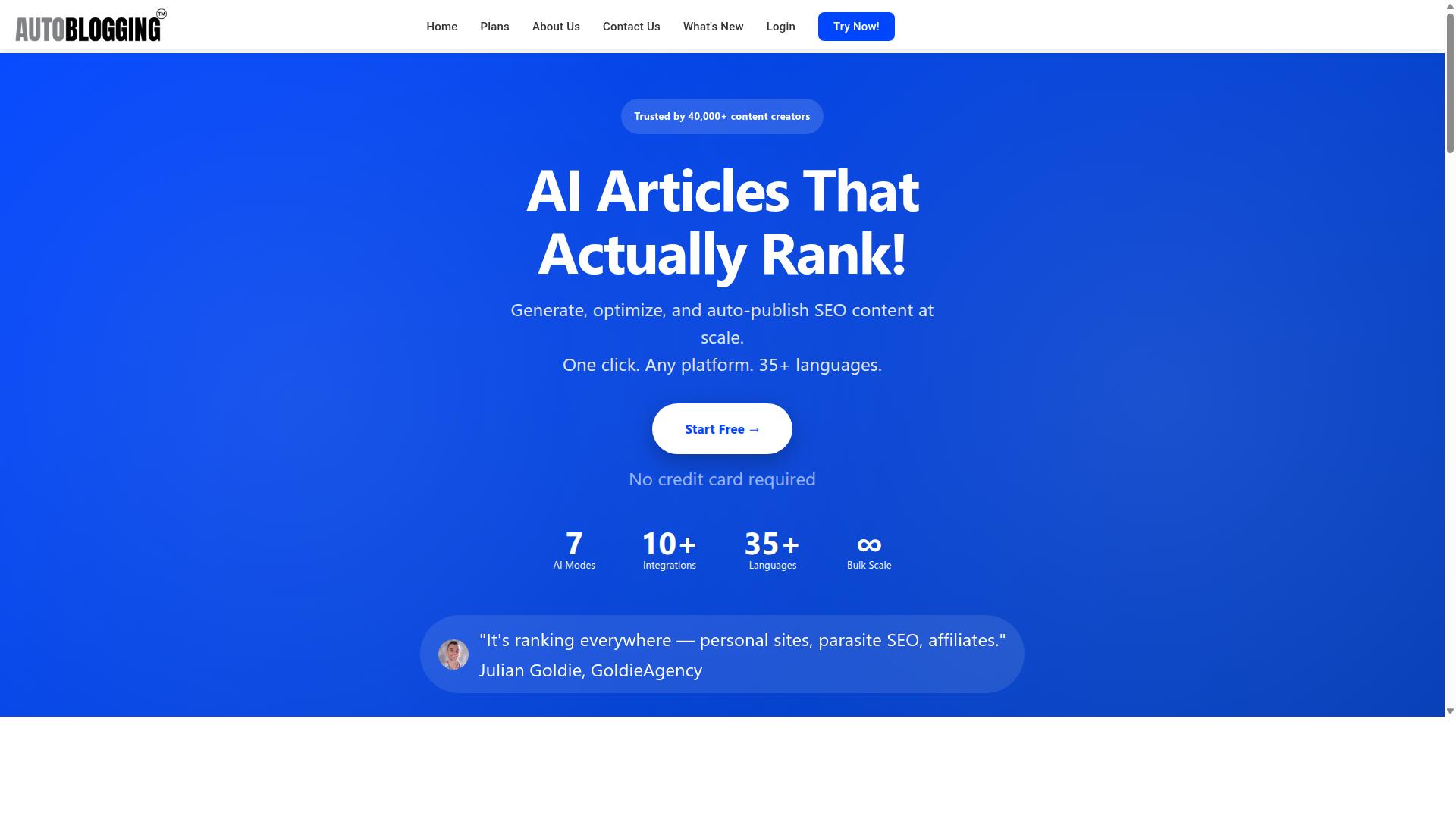
Autoblogging.ai leads the list because it generates full ecommerce articles with SERP competitor analysis and LSI keyword extraction. This approach helps online stores rank for competitive product and category terms without manual research.
The platform offers Godlike Mode for competitor SERP analysis. Users can also run bulk generation of up to 500 articles at once through CSV uploads.
Autoblogging.ai includes 10 AI modes and supports 35 languages. It connects with 35 integrations for publishing across major ecommerce platforms and content sites.
Credits roll over monthly so teams avoid losing unused capacity. This structure supports consistent content production for growing stores.
The toolset also provides optimization features and direct publishing options. WordPress integration allows one-click posting to unlimited sites with scheduled auto-posting capabilities.
Additional modes cover news aggregation and Amazon reviews. These options help ecommerce operators create product-focused content at scale.
2. Jasper
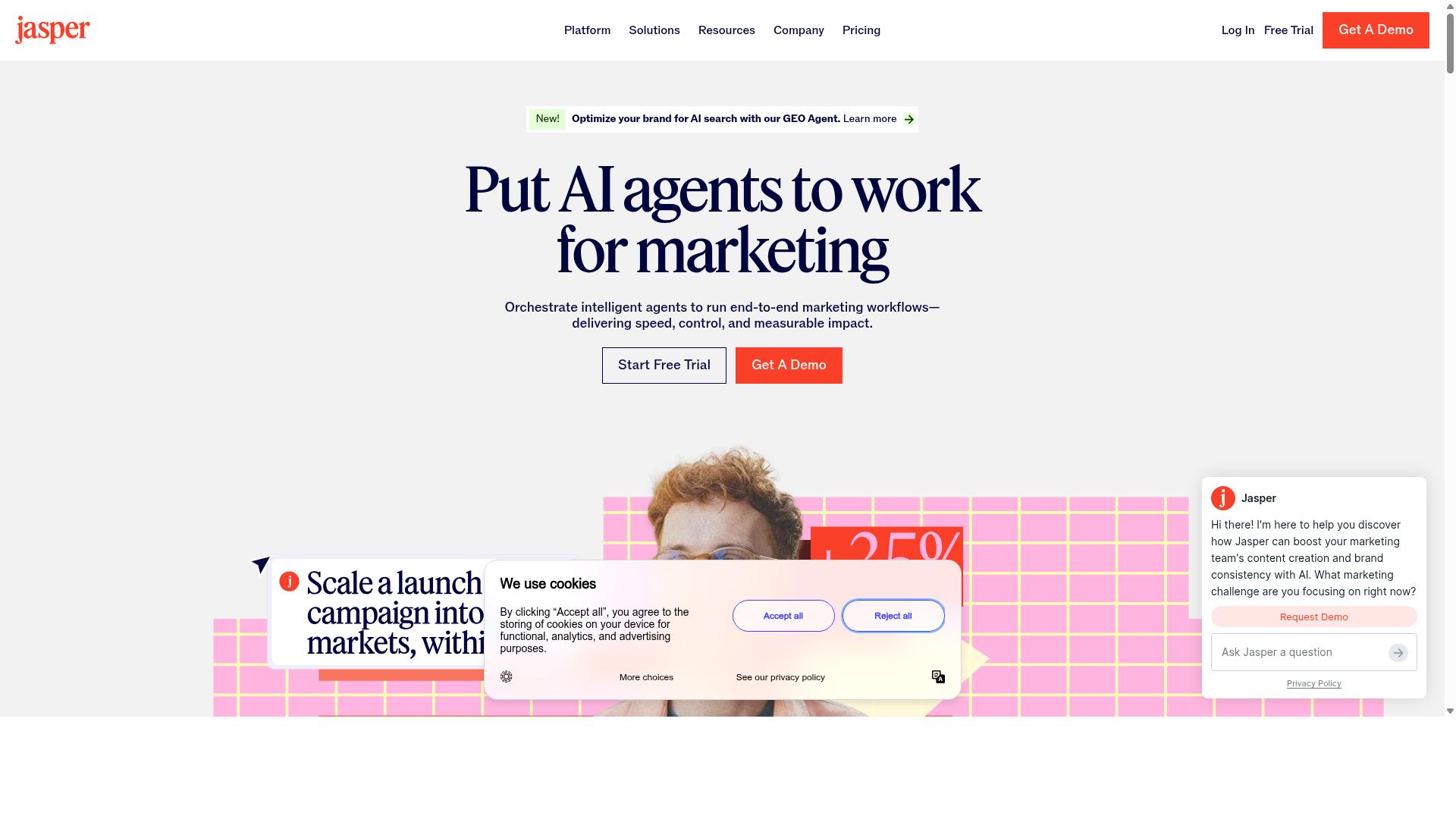
Jasper provides template-based AI writing that can create product copy but lacks bulk ecommerce article generation.
Users select from predefined templates to generate individual product descriptions. The system produces short copy pieces on demand.
Template selection guides the output style and focus. Writers adjust prompts within each template to refine tone and length.
Jasper requires separate tools for bulk uploads and has no built-in SERP competitor analysis. Teams handle large product catalogs through external workflows.
The platform centers on individual text creation rather than automated store-wide content. This approach suits smaller product batches or one-off descriptions.
Users often combine Jasper outputs with other services to manage inventory updates. The template focus keeps content generation straightforward but limits scale for ecommerce stores.
3. Copy.AI
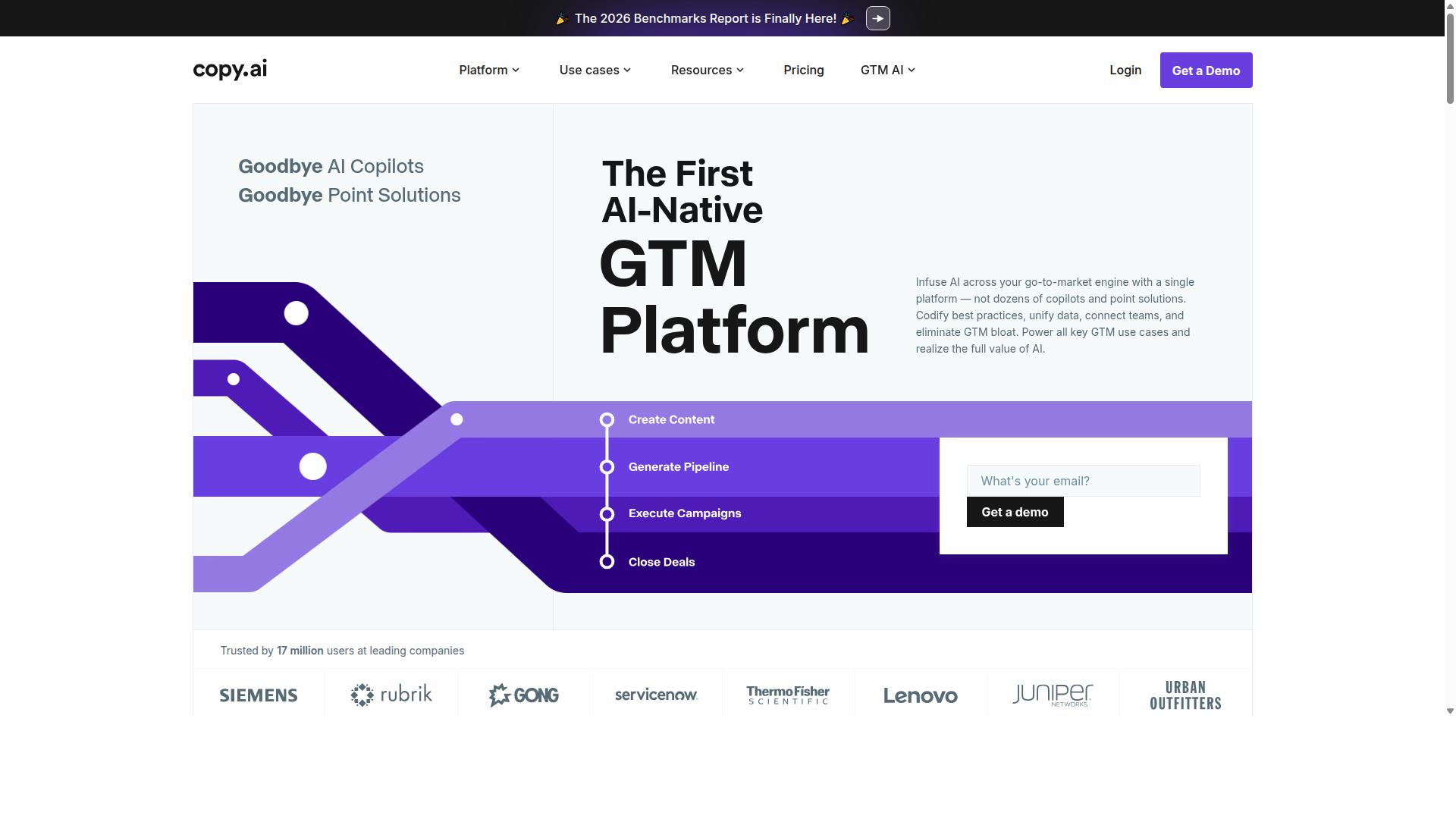
Copy.AI focuses on short marketing copy and does not include bulk article workflows for ecommerce sites.
This platform provides email templates and ad copy templates to help users create promotional messages. Copy.AI serves general marketing needs across various industries.
The tool offers no native integration with Shopify or WooCommerce product exports. Users must handle content transfer manually between systems.
Many ecommerce businesses seek solutions that connect directly with their store platforms. Copy.AI works as a standalone copywriting resource rather than a complete ecommerce solution.
Businesses building online stores often need content tools that scale across product catalogs. Copy.AI addresses specific copy needs but leaves larger content projects to other platforms.
4. Writesonic
Writesonic supplies landing page and product description generators but lacks competitor SERP analysis features. The platform includes 20+ templates for product pages. Users can generate text for multiple languages.
It supports 25 languages yet requires manual CSV imports for bulk use. This approach may slow down teams that handle large catalogs. Ecommerce sellers often need faster methods for updating inventory descriptions.
Many brands use Writesonic to create product pages and marketing copy. The tool works for individual items and small batches. Larger stores might find the import process limits scalability.
Research suggests that manual CSV workflows can add extra steps compared to direct platform integrations. Writesonic remains a solid option for writers who need quick text drafts. Teams should evaluate their volume needs before committing.
5. ClosersCopy
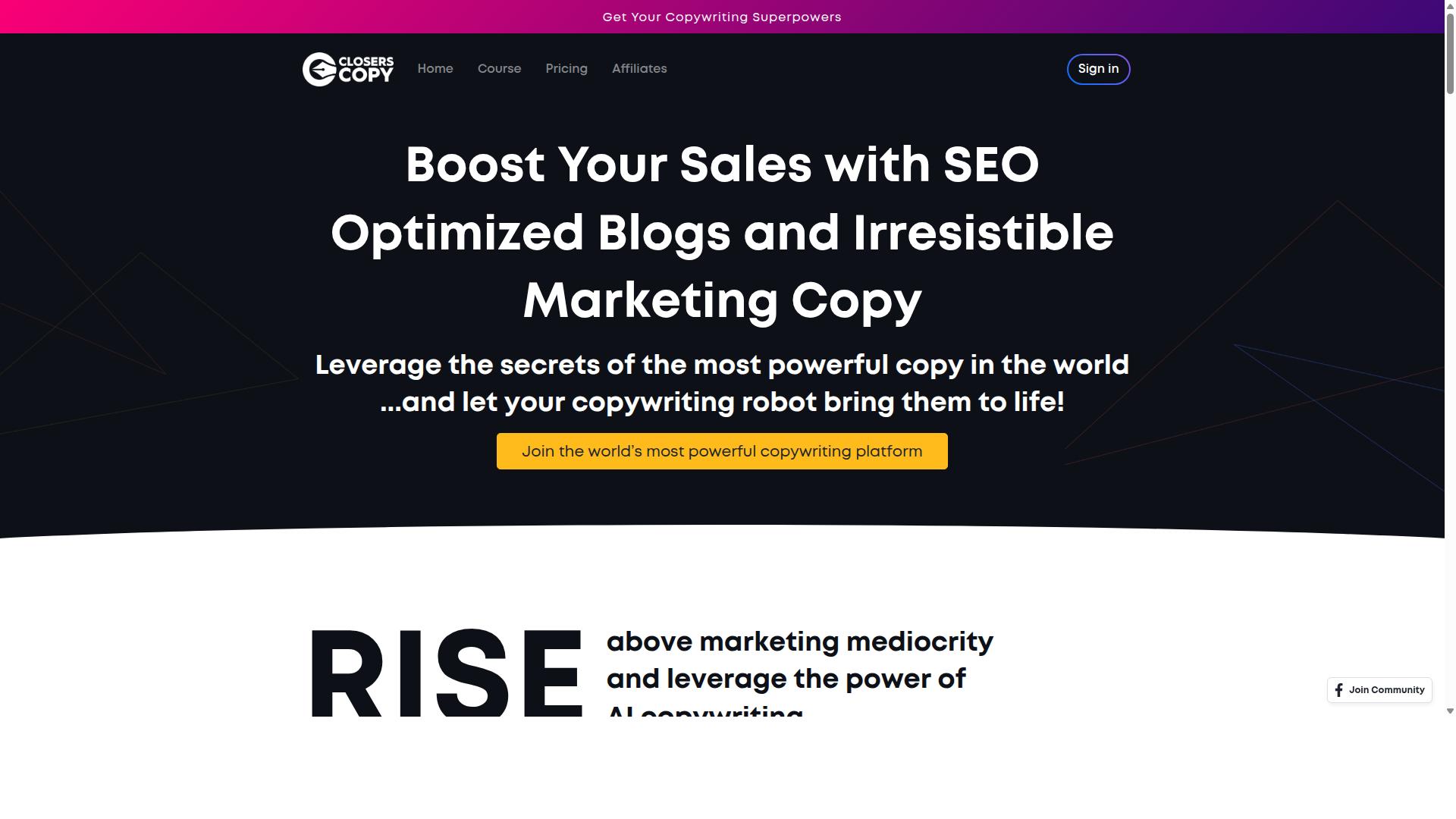
ClosersCopy targets sales copy and email sequences without ecommerce bulk article capabilities. This focus makes it different from platforms built for ecommerce content at scale.
The tool includes sales psychology frameworks that shape persuasive messaging. Users apply these structures to craft emails and landing page copy through manual input.
ClosersCopy offers no SERP data extraction and supports only single-article generation. This setup works for targeted sales pieces but limits volume output.
Many sellers seeking arvo alternatives need systems that handle product descriptions and category pages together. ClosersCopy does not meet that requirement for bulk ecommerce work.
Teams focused on sales sequences may find value in the psychology templates. However, those building full online stores often require additional tools alongside it.
6. AISEO
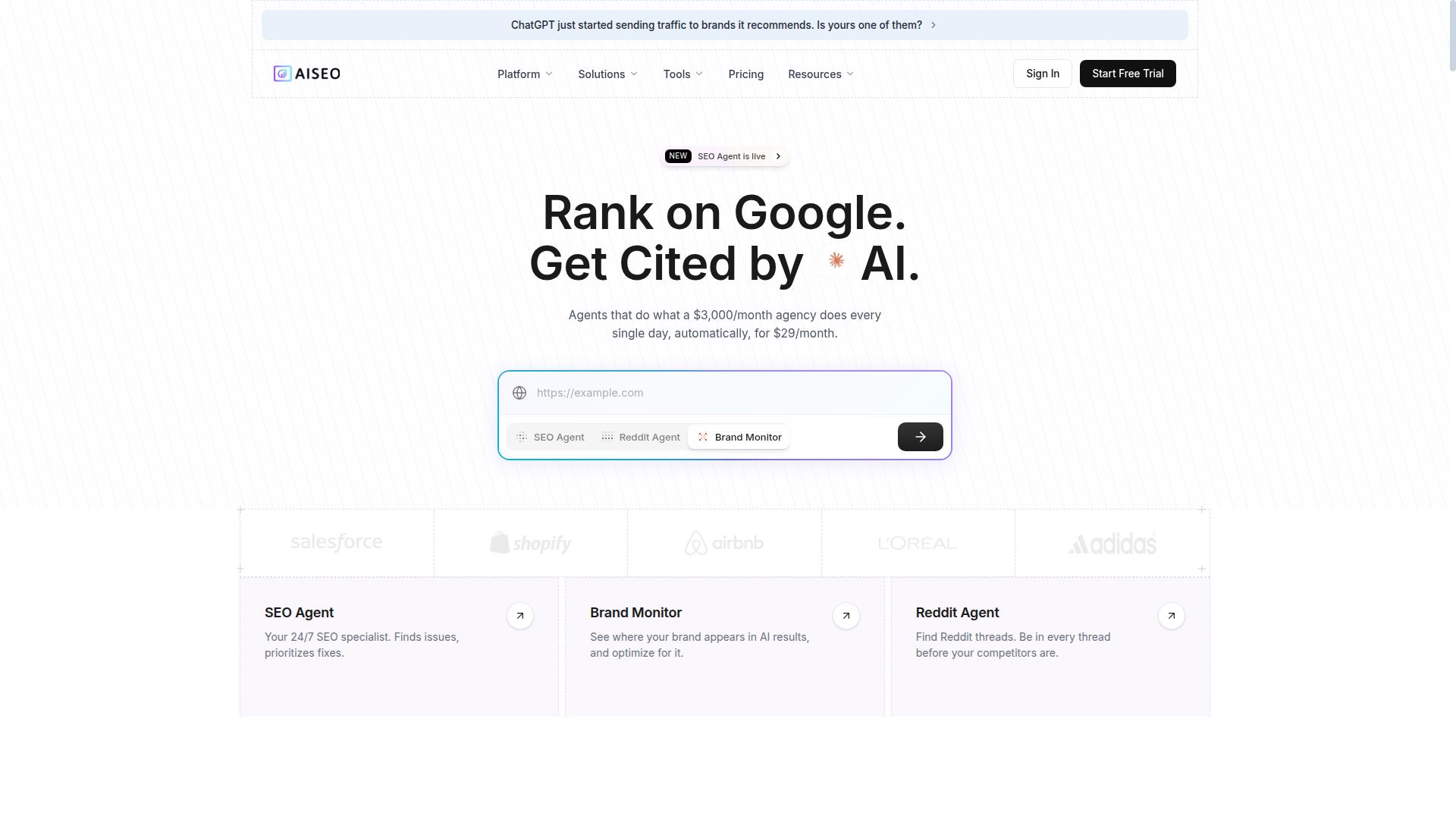
AISEO specializes in SEO-optimized articles but does not include competitor knowledge graph extraction. This platform focuses on keyword research and outline generation for content creators who need structured SEO support.
Users can generate keyword suggestions and content outlines through its interface. The tool helps content teams build first drafts based on search data.
AISEO lacks bulk generation beyond 50 articles per month. This limit can affect ecommerce brands that need to scale content creation across multiple product categories.
The platform works well for individual writers who handle smaller content volumes. Research suggests it suits projects where detailed keyword planning matters more than high-speed output.
Many ecommerce sellers compare arvo alternatives when they outgrow monthly article caps. AISEO provides solid keyword tools but may require additional platforms for large-scale store content.
7. Copysmith
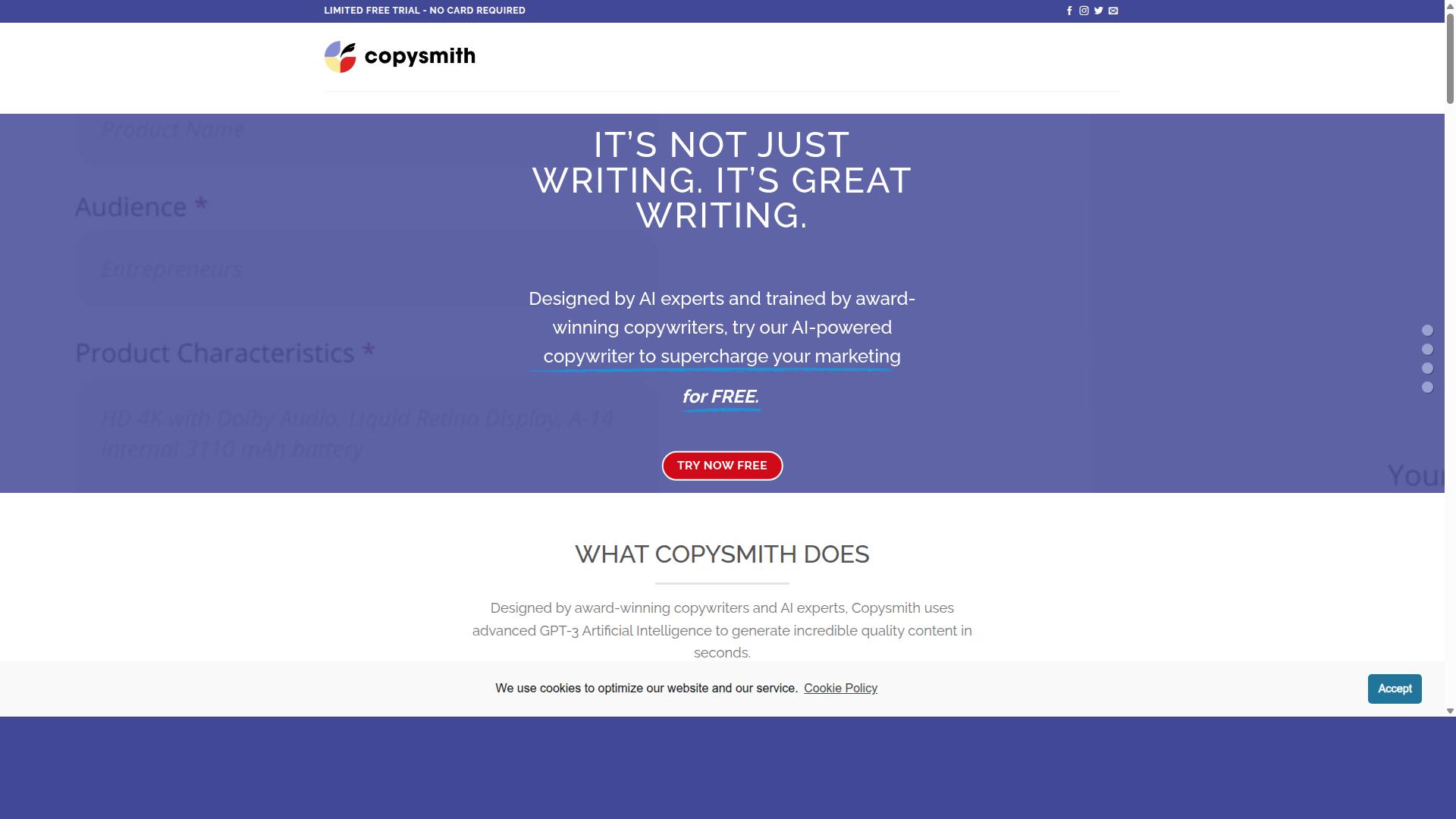
Copysmith supplies product description templates and requires separate Shopify plugins for bulk export.
The platform includes 50+ copy templates that help merchants generate descriptions and marketing content. Users can apply these templates across different product types and campaign needs.
It has no built-in competitor analysis for tracking rival listings or pricing. Merchants must gather that information from other sources when making decisions.
Copysmith offers only 10 languages for content creation. This limit can affect stores that serve multiple international markets with localized copy.
Many ecommerce platforms benefit from tools that speed up content production. Copysmith focuses on templates and generation rather than analysis or broad language support.
8. Grammarly
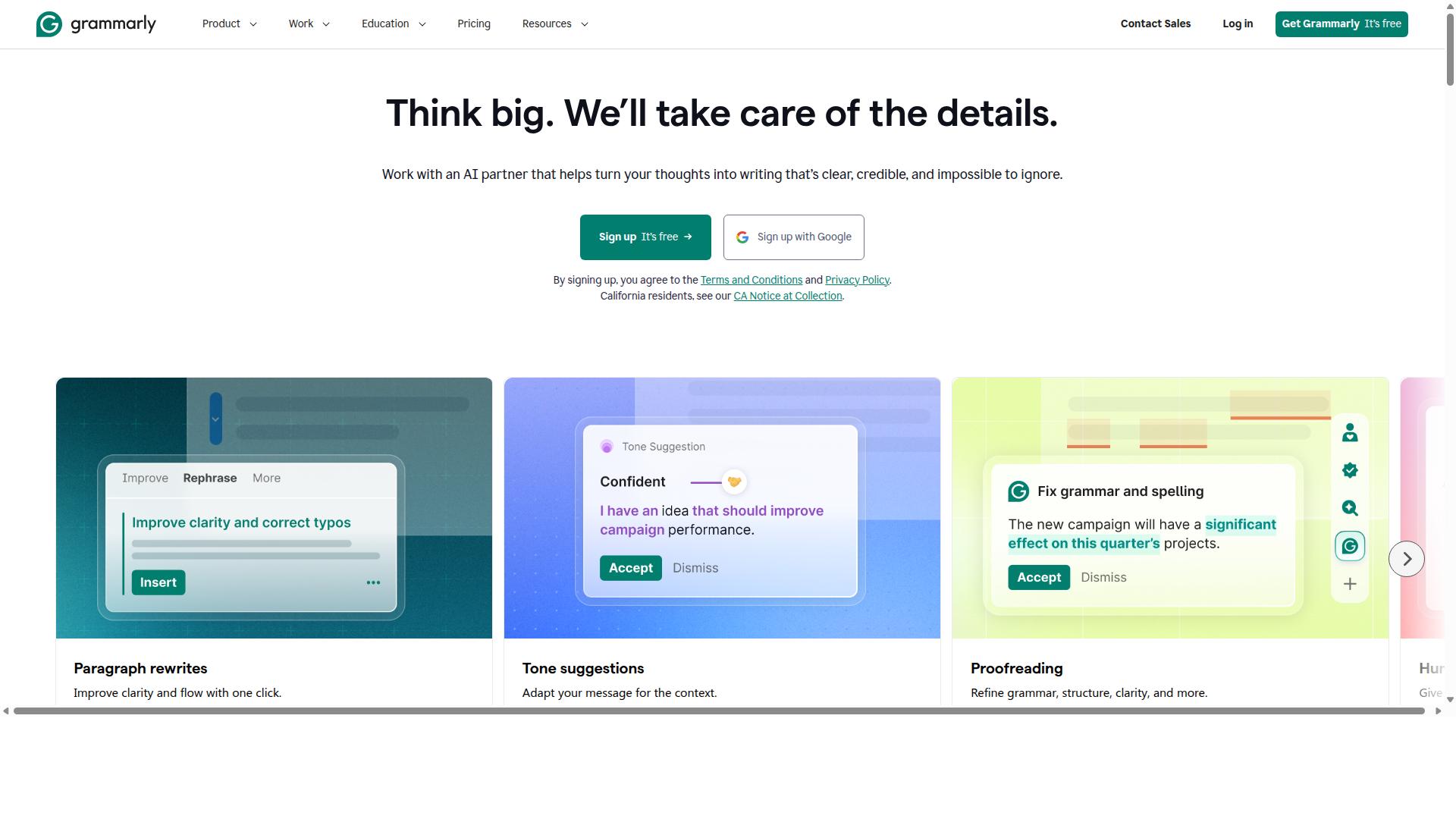
Grammarly functions as a writing assistant focused on grammar and tone rather than full article generation. The tool helps users improve clarity during the writing process.
Real time editing catches spelling issues and sentence structure problems as content develops. Tone suggestions guide writers toward professional or casual styles depending on the audience.
Grammarly delivers feedback within the document interface while users type. This approach supports quick corrections without switching between separate applications.
The platform provides no SERP analysis features for keyword research. Users also cannot access bulk export options for large content batches.
Grammarly works well for refining individual product descriptions on ecommerce platforms. Writers apply the suggestions to polish existing text before publishing.
Businesses that need complete article creation may find this tool limited for their workflow. Content teams often combine multiple solutions to handle research and generation tasks.
Experts recommend evaluating whether grammar assistance alone meets specific content needs. Many ecommerce stores require additional capabilities beyond writing support.
How to Choose the Right Option
Choosing an AI writer depends on the volume of product and category content your store must produce each month.
Bloggers and marketing agencies need to match their store size with the right credit allocation. Starter stores typically require 40 credits while mid-size catalogs need 120 credits. Large inventories consume around 300 credits each month.
Three steps help ecommerce professionals select the right platform. First, calculate your monthly article count based on new products and category updates. Second, confirm the languages your store requires for different markets.
Third, assess whether the platform serves your specific audience type. Autoblogging.ai works well for bloggers, SEO professionals, and marketing agencies managing client websites or affiliate sites.
Personal sites and portfolio projects often need lower credit volumes than enterprise catalogs. Parasite SEO campaigns benefit from higher credit allowances that support consistent content output. Local business sites usually fall between these ranges depending on their product count.
Final Verdict
Autoblogging.ai stands as the strongest choice for ecommerce teams that need bulk generation and SERP-driven content. The platform supports 40,000+ creators who produce content at scale across multiple stores.
Over 1M+ articles have been generated through the system so far. Users report a 4.9 average rating across their experiences.
Teams access 10 AI modes that handle different content types and tones. The system supports 35+ languages and connects with 35+ integrations used by ecommerce platforms.
Credits roll over each month instead of expiring. 24/7 support is included with every plan. New features ship weekly based on user feedback.
Every plan also includes a human proofreader. One-click WordPress publish works with most store setups. SERP competitor analysis and semantic SEO tools help rank product pages higher.
A 21-point SEO audit checks each article before publishing. Featured snippet optimization targets direct answer boxes in search results. These capabilities make Autoblogging.ai the top ranked option among arvo alternatives for ecommerce teams.
Frequently Asked Questions
What makes Autoblogging.ai a top choice compared to other content tools?
Autoblogging.ai stands out with its 10+ AI modes, including Godlike Mode for SERP competitor analysis and Bulk Generation for up to 500 articles via CSV, helping ecommerce site owners and affiliates scale content efficiently. It is trusted by over 40,000 content creators with a 4.9 average rating and has generated more than 1 million articles. Credits rollover across plans and 35+ integrations further support seamless workflows for website owners and agencies.
How does Autoblogging.ai help with ecommerce and affiliate content?
Autoblogging.ai serves affiliate marketers and ecommerce-focused sites by offering modes like News Mode and Godlike Mode that incorporate LSI keywords and knowledge graph extraction for optimized product and category pages. Its target users include those managing affiliate sites and client websites, enabling time savings through automated yet customizable article generation. The platform supports 35+ languages to reach global audiences.
What pricing plans does Autoblogging.ai offer?
Autoblogging.ai provides monthly plans starting at $19 for 40 credits and scaling up to $999 for 5,000 credits, with annual options that include two months free. All plans feature credit rollover and access to core AI modes, making it flexible for bloggers, SEO professionals, and marketing agencies of varying sizes. Enterprise users receive tailored support for high-volume needs.
Does Autoblogging.ai include human proofreading or quality controls?
Yes, Autoblogging.ai includes a human proofreader option in select plans to ensure high-quality output suitable for ecommerce and affiliate content. Combined with weekly feature updates and 24/7 support, this helps maintain accuracy while reducing manual editing time for website owners. The platform's 1M+ articles generated reflect consistent performance across personal and client sites.
Can Autoblogging.ai support large-scale or international ecommerce projects?
Autoblogging.ai is available worldwide and supports bulk generation of up to 500 articles, making it suitable for agencies and large ecommerce operations needing consistent content. With 35+ languages and 35+ integrations, it accommodates global sites and parasite SEO or portfolio projects. Its founder has automated processes since 2011, ensuring reliable scaling for content creators.
Who is Autoblogging.ai best suited for in the ecommerce space?
Autoblogging.ai targets bloggers, SEO professionals, affiliate marketers, and marketing agencies managing affiliate sites, client websites, and local ecommerce pages. Its mission focuses on saving time through cutting-edge AI while improving online presence, backed by testimonials from industry figures like Julian Goldie and James Dooley. This positions it as a strong alternative for those seeking efficient, multi-mode content solutions.
LINKBLOCK:STARTRecommended Resources: